kitchen
When Nonstick Starts Flaking, an Uncoated Titanium Pan Is the Honest Upgrade
Home Insight Hub is an Amazon Associate and earns from qualifying purchases. Read the full disclosure.
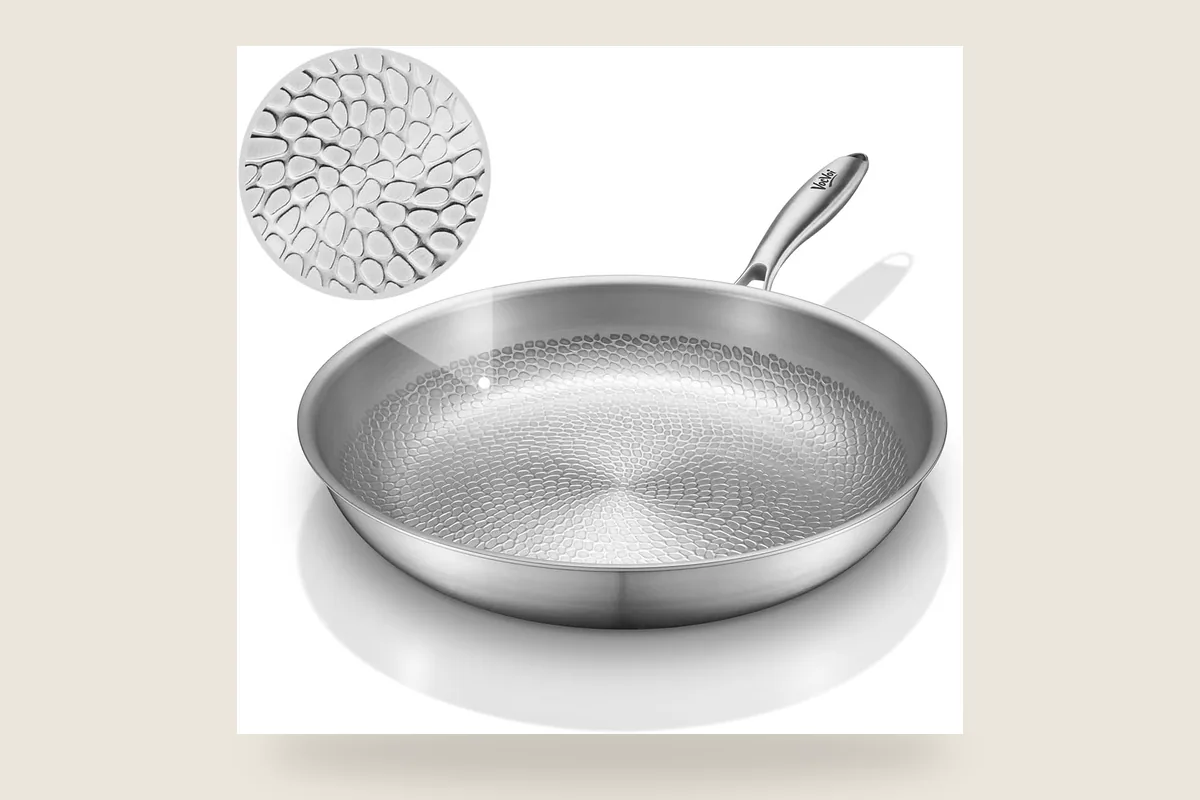
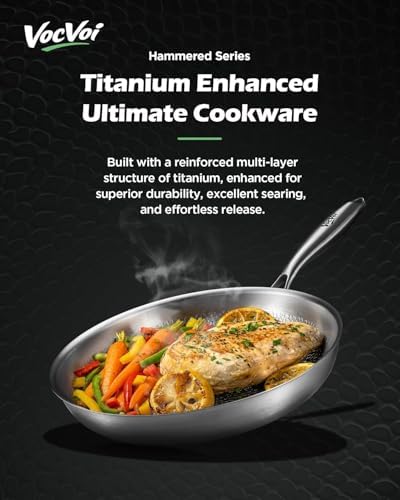
VocVoi 12" uncoated hammered pure titanium frying pan (ASIN B0H4L1BFBR) — a no-coating skillet marketed as pure titanium with PFOA/PFAS/PTFE-free positioning, induction-ready construction, and high oven-heat listing claims for people tired of watching coated nonstick peel. Fair warning: this is not “spray-and-forget” nonstick. Review consensus and category behavior both say you still need proper preheat, a little fat, and realistic eggs-on-day-one expectations. If your pain is flaking coatings and constant pan replacement, this is the honest upgrade lane — not a magic forever-slick surface.
Check if the VocVoi 12" Titanium Pan is currently in stock on Amazon →
| Buy It For Life | Renter-Friendly | Hyper-Specific Fix | |
|---|---|---|---|
| Product | Fully clad stainless tri-ply skillet | This VocVoi uncoated titanium 12” pan | Well-seasoned cast iron or carbon steel |
| Better if | You want decades of deglazing, fond, and repairable metal | You want one modern uncoated “daily driver” without ceramic peel anxiety | You already love seasoning rituals and high-heat searing |
| Skip if | You refuse any learning curve on heat/oil | You need true dump-and-slide eggs with zero fat | You hate heavy pans or open-flame preheat habits |
| Watch out | Can stick without technique | Needs preheat + fat; not a coated nonstick clone | Weight, maintenance, and reactivity with some foods |
| Cost position | Often higher for good clad sets | Mid-pack single skillet | Usually lower entry; skill cost is higher |
You know the exact moment: the spatula catches a soft gray flake in scrambled eggs, or the “nonstick” chicken leaves a full silhouette stuck to the pan after less than a year. The coating that looked glassy on unboxing now has pale rivers where metal shows through. You bought the pan to avoid scrubbing. Now you scrub and wonder what is ending up in dinner.
That is a different problem than a crowded cookware cabinet. Stacking scratches accelerate coating death — and a vertical pots and pans rack still matters — but once the surface is flaking, storage will not put the coating back. You need a different cooking surface, not another soft layer waiting to peel.
Why “Just Buy Another Nonstick” Keeps Failing
Coated nonstick is a convenience layer glued to metal. Heat cycling, metal utensils, dishwasher abuse, empty-pan preheats, and cabinet stacking all shorten that layer’s life. Ceramic coatings often start great and go sticky early. Traditional PTFE-style coatings can last longer in careful homes and still eventually scratch, dull, or flake under real family use.
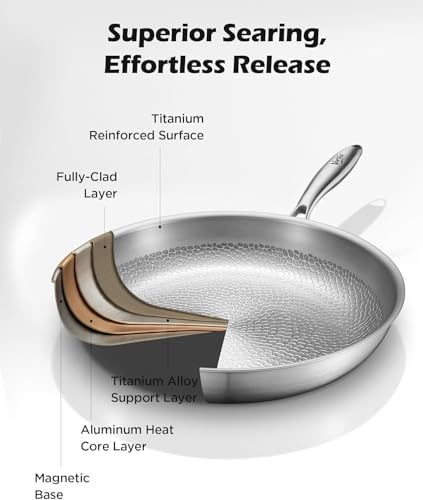
“Titanium-infused” marketing makes this worse. A lot of pans use titanium language for a reinforced coating, not a solid uncoated titanium cooking surface. If the pitch is still a sprayed or bonded nonstick film, you are back in the replace-every-1–3-years loop — even if the box says titanium in big letters.
Uncoated metal pans (stainless, carbon steel, cast iron, and true uncoated titanium designs) trade the peel problem for technique. Food release comes from heat control, fat, and surface condition — not a temporary film. That is the honest bargain.
What to Verify Before You Buy Any “Titanium” Pan
- Uncoated vs titanium-reinforced coating. Look for language like uncoated, pure titanium cooking surface, or no PTFE/PFOA/PFAS coating — not only “titanium reinforced nonstick.”
- Cooktop fit. Induction needs a magnetic base story. Gas and electric are easier. Confirm the listing if you run induction.
- Oven and handle reality. High oven numbers on the pan body do not always mean the handle loves broilers forever. Read the care line you actually got in the box.
- Size vs burner. A 12-inch skillet is the family default; it overhangs small apartment burners and needs even preheat.
- Expectations for eggs. Day-one egg tests are where uncoated pans get one-star reviews. That usually means heat/oil technique, not a secret second coating you forgot to buy.
What Actually Works — VocVoi 12” Uncoated Titanium Pan
The flaw first: This pan will frustrate anyone who expects coated-nonstick behavior on a cold pan with zero oil. Uncoated titanium still wants a short preheat and a thin film of fat for sticky foods. Some reviewers in this category also note a learning curve on heat level (too hot too fast can brown unevenly), and a single 12-inch skillet does not replace a full set. The listing’s “nonstick” wording describes food-release performance of an uncoated surface — it is not a peelable PTFE layer you can abuse forever. If you want dump-and-slide eggs with cooking spray and a metal fork, stay in coated nonstick and accept replacement cycles.
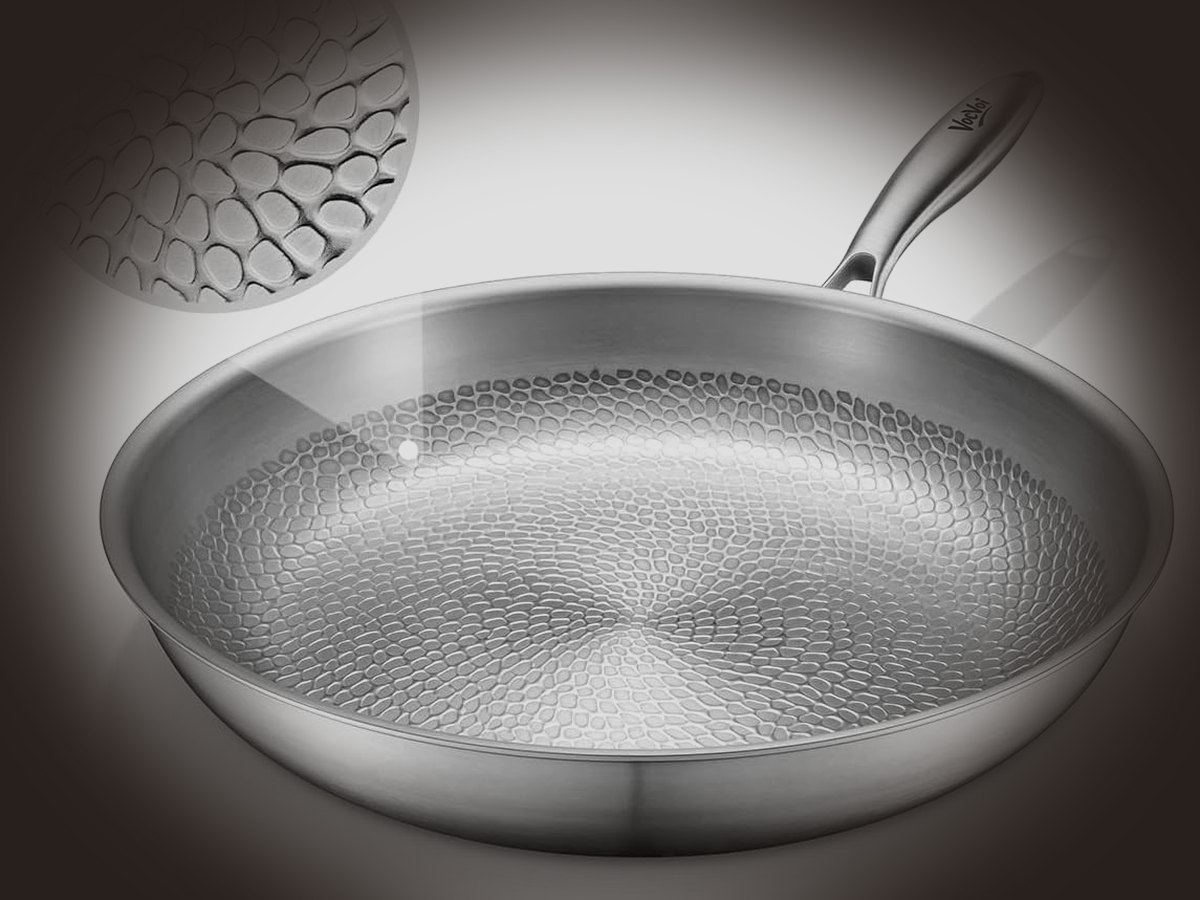
If you can live with that habit shift, the VocVoi 12” pan (B0H4L1BFBR) matches the research gap cleanly: hammered pure-titanium positioning, explicit PFOA/PFAS/PTFE-free skillet language, no traditional chemical coating story, all-cooktop compatibility including induction, and high oven-safe marketing (listing claim up to 1000°F on the pan). PDP attributes on the 2026-08-18 check listed brand VocVoi, material titanium, special feature nonstick (release behavior), and about 3-quart capacity on the 12-inch configuration. Amazon signals at scrape time: roughly 4.3 stars from about 1,468 ratings, 1K+ bought in past month callout, and a #1 Best Seller badge in Fajita Pans — treat badges as popularity, not lab proof.
- ASIN B0H4L1BFBR — VocVoi 12" uncoated hammered pure titanium frying pan
- Listing materials story: pure / uncoated titanium cooking surface (not a titanium-sprayed PTFE pan)
- Coating callouts: PFOA / PFAS / PTFE free skillet language on title and bullets
- Cooktops: induction, gas, electric, ceramic, glass (listing: all-cooktop / magnetic conductivity claim)
- Heat: oven-safe marketing up to 1000°F on listing bullets; confirm handle limits in your manual
- Capacity attribute on PDP: about 3 quarts class on the 12" option
- Care attribute on PDP (2026-08-18): dishwasher safe listed under product care instructions — hand-wash still kinder to handles and finish long-term
- Consensus signal (PDP check 2026-08-18): ~4.3★ from ~1,468 Amazon ratings; high recent-purchase volume
VocVoi 12" Uncoated Pure Titanium Frying Pan
Hammered uncoated titanium skillet for cooks replacing flaking coated nonstick — induction-ready listing claims, no traditional nonstick film to peel.
Check if the VocVoi 12" Titanium Pan is currently in stock on Amazon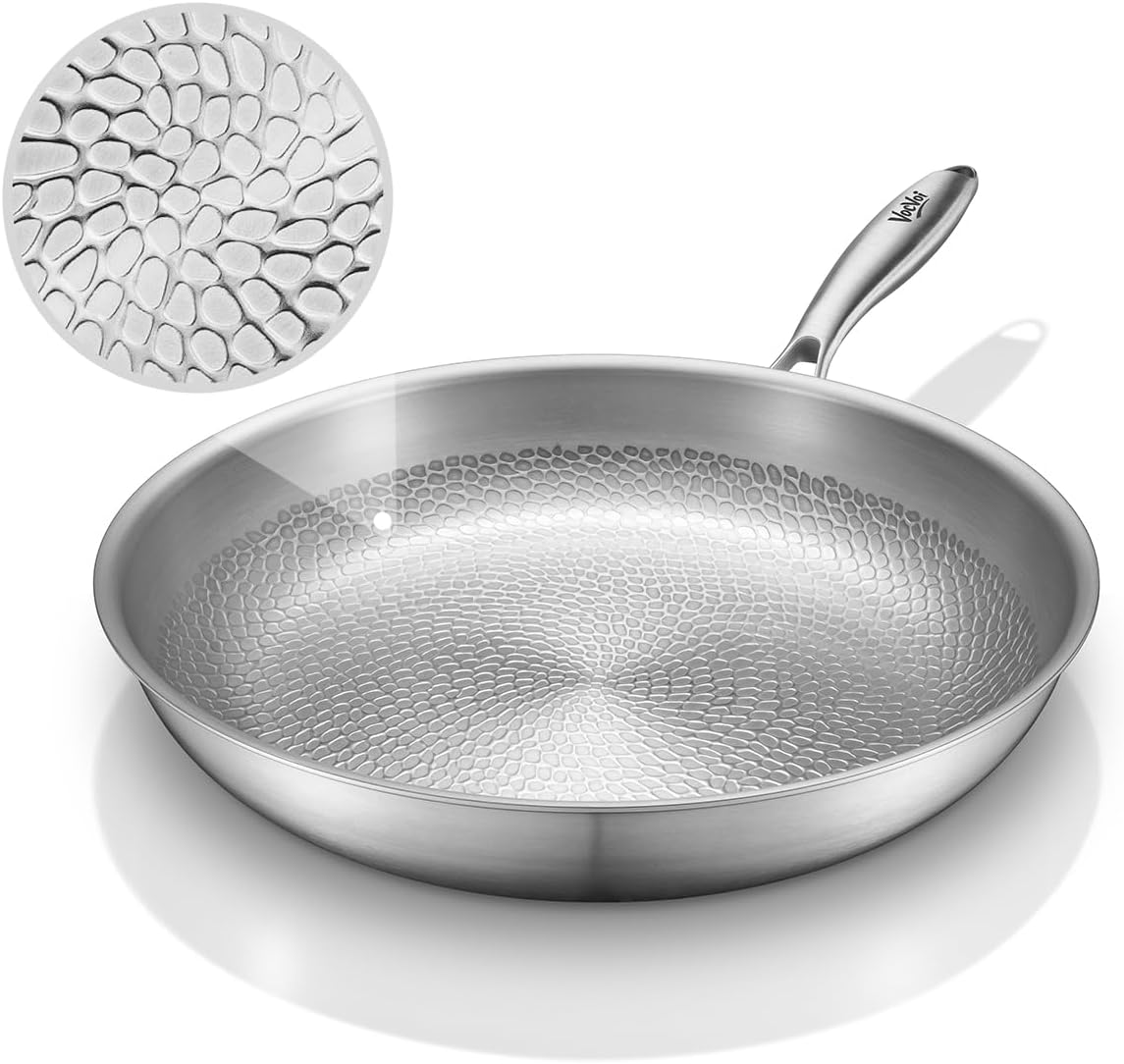
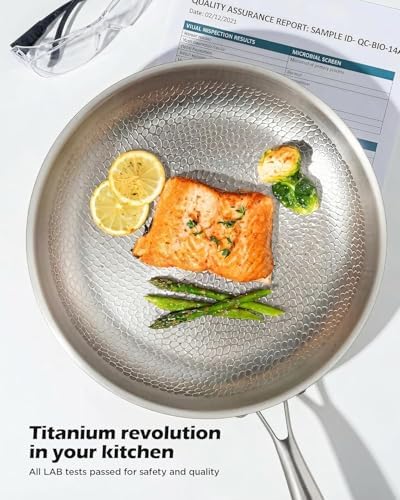
After analyzing the listing claims and the large Amazon review base on this ASIN, the consensus pattern is practical rather than magical: people moving off peeling ceramic or worn nonstick like that there is no soft coating left to flake into food. Release is “good when preheated with oil,” not “identical to brand-new Teflon.” Disappointed notes in the uncoated-titanium category cluster around egg sticking, expecting zero-oil performance, and underestimating how hot a thin metal pan gets on a big burner. Buy it for what it is: a durable uncoated daily skillet with modern induction-friendly packaging — not a disposable coated pan in a shinier box.
Better if: your current nonstick is scratched or flaking, you want PFAS/PTFE-free cookware positioning without ceramic peel anxiety, and you will give the pan two weeks of preheat-and-oil practice.
Skip if: you only scramble eggs on medium-low with spray and refuse fat, you need a full multi-piece set today, or you want heirloom clad stainless you can thrift and refinish forever.
Choose stainless instead if you care more about fond, deglazing, and multi-decade repairability than easy weeknight release. Choose cast iron instead if you already maintain seasoning and want unmatched sear mass. Fix storage first if the coating is still intact but every grab scrapes pan-on-pan — start with the adjustable pots and pans organizer and why pot lids never stay put.
How to Cook on Uncoated Titanium Without Hating Breakfast
- Preheat empty on medium for a minute or two until a drop of water skitters. Do not blast max heat from cold unless you are searing steak and you know your burner.
- Add a thin film of oil or butter and let it shimmer before food hits the pan.
- Do not force early flips. Proteins release when the surface has set; ripping too soon creates the “this pan sticks” one-star review.
- Cool before washing. Thermal shock is rude to any pan and any cook’s patience.
- Store on edge or with a pan protector. Uncoated metal will not flake a coating onto the next pan, but stacking still dings rims and polish. Vertical slots in a cookware rack keep the new skillet from living under a Dutch oven.
If a pan says “titanium nonstick” but also describes a coating, ceramic layer, or “reinforced surface,” assume it can still wear off. The VocVoi listing for B0H4L1BFBR leans on uncoated pure titanium and PFAS/PFOA/PTFE-free skillet copy. That is the distinction that matters when your last pan started snowing gray flecks into omelets.
The Alternatives
The “Buy It For Life” Pick
Fully clad stainless tri-ply skillet — The long game for cooks who deglaze, make pan sauces, and accept a short stick curve in exchange for decades of service. Flaw: eggs and fish need more attention than coated nonstick, and good clad costs real money. Worth it if you want one metal language across a full set.
The Renter-Friendly Pick
This VocVoi 12” uncoated titanium pan (B0H4L1BFBR) — No install, works across common apartment cooktops per listing claims (including induction), and avoids another peeling coating in a rental kitchen you did not choose. Accept the preheat/oil habit and measure your burner so a 12-inch base is not half hanging in air.
The Hyper-Specific Fix
Seasoned cast iron or carbon steel — When you want maximum sear and already enjoy maintenance rituals. Flaw: weight, seasoning upkeep, and not everyone wants a 10-pound breakfast ritual. Keep these if you love them; do not buy titanium only because social media said cast iron is dead.
Better If / Skip This If
- Better if: you are replacing a flaking or gouged coated pan and want uncoated metal with modern induction packaging.
- Skip this if: you need five matching pieces before Thursday — shop a set, not a hero skillet.
- Stay coated (and budget for replacement) if: zero-oil eggs are non-negotiable and you refuse technique changes.
- Organize first if: the pan is fine and the cabinet is the villain — lids and stacks are a storage job, not a metallurgy job.
Leftovers after the new skillet does its job still need a resting place that will not stink up the fridge. Pair a cookware upgrade with leakproof glass food storage so Tuesday’s stir-fry does not live in stained plastic.
Your Next Step This Weekend
- Retire any pan that is flaking, deeply gouged, or sticky on every medium-heat egg.
- Measure your most-used burner and cabinet slot so a 12-inch skillet actually fits.
- On first cook, do a simple oil-preheat test with sliced onions or a buttered toast melt before you attempt a fragile omelet.
- Give the pan ten real dinners before you judge release — uncoated surfaces reward repetition.
- Park it vertically so the next heavy pot is not grinding the cooking face in a stack.
Ready to stop cooking on a peeling coating?
The VocVoi 12" uncoated pure titanium pan is the practical pick when flaking nonstick is the real kitchen problem and you will meet the pan halfway on heat and oil.
Check if the VocVoi 12" Titanium Pan is currently in stock on Amazon →Frequently Asked Questions
Is a pure titanium pan the same as titanium-coated nonstick?
No. Many pans market titanium-reinforced coatings that can still wear or flake. An uncoated pure titanium pan is sold as a metal cooking surface without a traditional PTFE/ceramic nonstick film. Always read whether the release layer is a coating or the bare metal.
Will food stick to an uncoated titanium frying pan?
It can if you treat it like coated nonstick. Review consensus and normal uncoated-metal behavior both point to preheating and using a little oil or butter for better release, especially with eggs and delicate fish. Technique matters more than slogans.
Is the VocVoi titanium pan induction compatible?
The listing states compatibility with induction as well as gas, electric, ceramic, and glass cooktops, citing magnetic conductivity. Confirm the current product detail page if induction is your only heat source.
What should I do with a nonstick pan that is flaking?
Stop using a pan that is actively shedding coating into food and replace it. Moving to uncoated metal such as pure titanium, stainless, carbon steel, or cast iron avoids another soft coating cycle. Store the new pan so heavy pieces are not grinding the cooking surface in a stack.
Do I still need a pots and pans organizer if I buy better cookware?
Yes if stacking is how your last coating died. Vertical racks and lid storage stop abrasion and avalanche noise even when the cooking surface itself no longer peels. Upgrade the pan and the cabinet job separately — start with the adjustable pots and pans organizer when storage is half the story.
Full disclosure: As an Amazon Associate, we earn from qualifying purchases. Our recommendations are based on research, review analysis, and real household use only where explicitly noted. Commission rates play no role in what gets recommended — if a simple hardware-store fix beats a branded option, we'll say so.